

BitViraj Technologies - Your Gateway to
Tomorrow's Innovations
Vintage Car Tokenization: A Comprehensive Framework for Fractional Ownership of Automotive Assets
The global vintage car market represents a $60-80 billion alternative asset class with annual appreciation rates averaging 8-12%, yet remains largely inaccessible to retail investors. Tokenization is poised to democratize this exclusive market by enabling fractional ownership through blockchain technology.

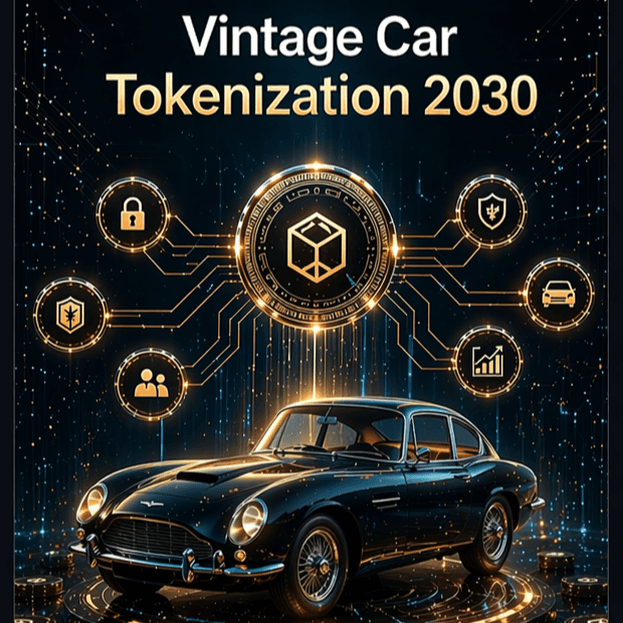
Vintage Car Tokenization
A Comprehensive Framework for Fractional Ownership of Automotive Assets
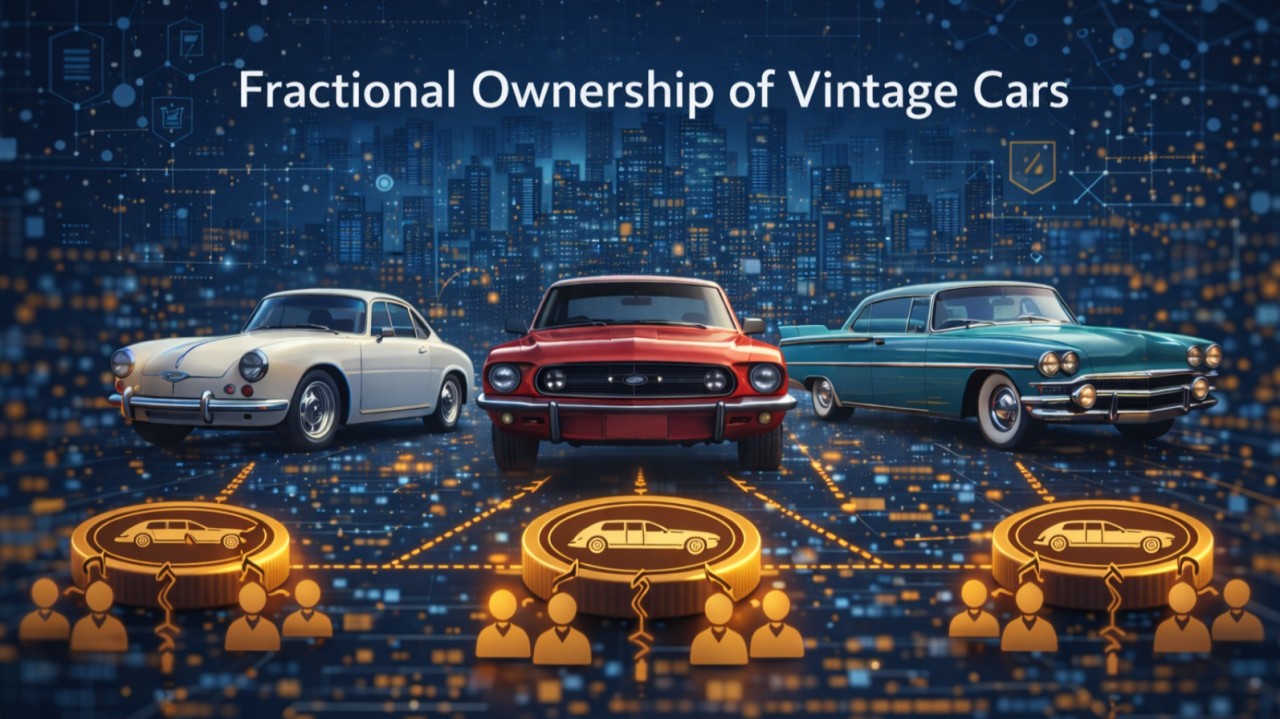
Vintage Car Tokenization: A Comprehensive Framework for Fractional Ownership of Automotive Assets
Executive Summary: The Dawn of Digital Automotive Collectibles
The global vintage car market represents a $60-80 billion alternative asset class with annual appreciation rates averaging 8-12%, yet remains largely inaccessible to retail investors. Tokenization is poised to democratize this exclusive market by enabling fractional ownership through blockchain technology. This report analyzes the technical, legal, and market framework for vintage car tokenization with specific focus on the Indian and global landscape in 2026.
Market Analysis: The Untapped Potential
Global Vintage Car Market Metrics
- Total Market Value: $67.2 billion (2025, Hagerty Report)
- Annual Growth: 7.4% CAGR (2015-2025)
- Average Holding Period: 8.7 years
- Top Appreciating Segments: 1960s-70s European sports cars, Japanese icons, limited-production supercars
Indian Context
- Estimated vintage car population: 35,000+ registered vehicles
- Market value: ₹2,800+ crore ($350+ million)
- Primary hubs: Mumbai, Delhi, Chennai, Kolkata
- Annual auction turnover: ₹120-150 crore
Investor Demographics & Access Barriers
| Investor Profile | Traditional Model | Barriers Faced |
|---|---|---|
| Ultra-HNWI (Net worth >$100M) | Direct ownership, multiple vehicles | None |
| HNWI ($5-100M) | 1-2 vehicles | Storage costs, maintenance expertise |
| Mass Affluent ($1-5M) | Limited participation | High entry cost, lack of expertise |
| Retail Investors (<$1M) | Virtually excluded | All barriers |
Tokenization Addressable Market: Currently inaccessible capital: $15-20 billion globally; Indian retail participation potential: 200,000+ investors; minimum investment reduction: from ₹50 lakh+ to ₹10,000-50,000.
Technical Architecture: The VINT Protocol
The 7-Layer Vintage Car Tokenization Stack
LAYER 7: USER INTERFACE ├── Investor Dashboard ├── Virtual Showroom (VR/AR) └── Portfolio Management
LAYER 6: SECONDARY MARKET ├── Peer-to-Peer Exchange ├── Auction Mechanism └── Liquidity Pools
LAYER 5: COMPLIANCE & REGULATORY ├── KYC/AML Verification ├── SEBI/RBI Integration ├── Tax Automation └── Cross-border Compliance
LAYER 4: ASSET MANAGEMENT ├── Storage Monitoring ├── Maintenance Tracking ├── Insurance Management └── Usage Scheduling
LAYER 3: TOKEN PROTOCOL ├── VINT Token Standard ├── Smart Contract Suite ├── Oracle Integration └── Governance Mechanism
LAYER 2: BLOCKCHAIN INFRASTRUCTURE ├── Layer 1: Ethereum/Polygon ├── Layer 2: zk-Rollups ├── Interoperability Bridges └── Digital Identity Layer
LAYER 1: PHYSICAL ASSET ├── Vintage Car ├── Documentation ├── Provenance History └── Storage Facility
The VINT Token Standard (ERC-3525 Implementation for Semi-Fungible Tokens)
// VINT Token Contract Structure
contract VINTToken is ERC3525 {
    struct CarData {
        string vin;
        uint256 year;
        string make;
        string model;
        uint256 originalProduction;
        uint256 knownSurvivors;
        uint256 restorationLevel; // 1-10 scale
        uint256 certificationScore; // 1-100 points
    }

    struct OwnershipRight {
        uint256 fraction; // Basis points (1/10,000th)
        uint256 usageRights; // Hours per year
        uint256 votingWeight; // Governance rights
        uint256 revenueShare; // Rental income percentage
    }

    // Each token ID represents a specific vehicle
    // Each slot represents an investor's fractional share
}
Key Features: Multi-dimensional tokens (ownership + usage + governance rights), dynamic metadata, programmable revenue distribution, usage scheduling.
IoT & Physical-Digital Integration
Vehicle Monitoring Stack:
- Physical Security: GPS Trackers with Geofencing, Biometric Access Control, Climate Monitoring Sensors, Vibration/Tamper Sensors, OBD-II Data Feeds
- Digital Security: Smart Contract Lock/Unlock, Multi-sig for movement, Usage Logs on-chain, Insurance Oracle Links, Maintenance Reminders
Oracle Network for Real-World Data:
- Valuation Oracles: Hagerty, Classic.com, auction results
- Condition Oracles: Mechanic certifications, restoration reports
- Storage Oracles: Climate control monitoring, security status
- Insurance Oracles: Policy status, claim history
Asset Selection & Due Diligence Framework
Vehicle Grading System (VGS 2.0) – 100-point scale
| Category | Weight | Parameters |
|---|---|---|
| Originality | 30% | Matching numbers, factory paint, original components |
| Condition | 25% | Body, interior, mechanical, electrical |
| Provenance | 20% | Ownership history, documentation, celebrity ownership |
| Rarity | 15% | Production numbers, survivors, special editions |
| Historical Significance | 10% | Racing history, movie appearances, innovations |
Certification Levels: Platinum (90-100), Gold (80-89), Silver (70-79), Bronze (60-69).
Minimum Tokenization Criteria
- Vehicle Age: 25+ years
- Minimum Valuation: ₹50 lakh ($60,000)
- Documentation: Clear title, import papers
- Appraisal: Two independent appraisals
- Storage: Climate-controlled facility
- Insurance: Agreed value policy
- Maintenance Plan: Annual schedule & budget
Legal & Regulatory Framework
Global Regulatory Landscape
United States:
SEC Regulation – Tokens qualify as securities under Howey Test. Structure via Delaware LLC with tokenized membership. Taxation as pass-through entity.
European Union:
MiCA Compliance – Digital asset framework implementation. Structure via special purpose vehicle with tokenized shares. VAT exemptions for investment vehicles.
United Arab Emirates:
ADGM/DFSA frameworks. Protected cell companies (PCC). 0% corporate and capital gains tax.
India (2026 Projection):
- Primary Regulator: SEBI (Securities)
- Secondary Regulator: RBI (Digital Currency)
- Vehicle Structure: AIF Category III or REIT-like structure
- Token Classification: Digital Securities
- Tax Treatment: Capital Gains (similar to equity/debt instruments)
- Minimum Investment: ₹10 lakh for AIF (may reduce for fractional)
- Reporting: Monthly NAV, Annual Audit
Smart Legal Contracts & Provenance Tracking
// Simplified Legal Contract Implementation
contract VintageCarTokenAgreement {
    address[] public tokenHolders;
    mapping(address => uint256) public ownershipPercentage;

    struct GovernanceVote {
        uint256 proposalId;
        string description;
        uint256 votesFor;
        uint256 votesAgainst;
        bool executed;
    }

    function executeMaintenance(uint256 cost, address vendor) public {
        require(totalVotesForMaintenance[maintenanceId] > 50, "Not approved");
        require(address(this).balance >= cost, "Insufficient funds");
        vendor.transfer(cost);
        emit MaintenancePerformed(cost, vendor, block.timestamp);
    }
}
Provenance on Blockchain: Manufacturing → First Owner → Ownership Transfers → Restoration → Appraisal → Tokenization → Fractional Ownership Changes.
Economic Model & Value Proposition
Revenue Streams for Token Holders
- Capital Appreciation: Historic annual returns 8-12%, tokenized premium 15-25% → total 9.2-15% annualized.
- Rental Income: Classic car rental rates $500-5,000/day. Example: ₹1 crore car, 30 rental days @ ₹50,000/day = ₹15 lakh annual revenue.
- Event Participation Fees: Concours d'Elegance ($2k-10k), film rentals ($1k-5k/day), museum stipends ($500-2k/month).
- Merchandising & IP: Scale model licensing, digital collectibles (NFTs), brand partnerships.
Cost Structure (Typical ₹1 Crore Vehicle, Annual)
- Storage (Climate-controlled): ₹1,20,000 - ₹2,40,000
- Insurance (Agreed Value): ₹60,000 - ₹1,20,000
- Maintenance & Servicing: ₹80,000 - ₹2,00,000
- Platform Management Fee: 1-2% of asset value
- Regulatory Compliance: ₹2,00,000 - ₹5,00,000
- Marketing & Rental Ops: 15-20% of rental income
- Contingency Reserve: 5% of asset value
Investor Returns Simulation
1965 Jaguar E-Type (₹80 lakh valuation) – 1% fractional ownership (₹80,000)
Year 1: Capital Appreciation 10% = ₹8,000; Rental Income (40 days @ ₹40k) → 1% share = ₹1,600; Event Fees = ₹400 share → Total ₹10,000 (12.5% yield)
Year 5 Cumulative: Asset Value ₹1.28 crore (60% appreciation); Total Distributions ₹60,000 (75% of investment); Token Value ₹1,28,000; IRR ≈ 18.2% annualized
Case Study: Tokenizing a 1973 Porsche 911 Carrera RS
Asset Details:
- Chassis: 9113600520 | Production: 1,580 units worldwide | Survivors: ~800
- Valuation: $850,000 (₹6.8 crore) | VGS Score: 92/100 (Platinum)
- Provenance: Original Italian delivery, single family ownership
Tokenization Parameters:
- Total Tokens: 1,000,000 VINT tokens | Token Price: $0.85 (₹68)
- Minimum Investment: 100 tokens ($85/₹6,800)
- Holding Structure: Delaware LLC (CarCollect LLC)
- Management: Professional curator + DAO governance
- Storage: Climate-controlled facility in Germany
- Insurance: Chubb agreed value policy
Performance Tracking (18 Months Post-Tokenization)
| Metric | Initial (2024) | Current (2025) |
|---|---|---|
| Token Holders | 847 | 912 |
| Average Holding | 1,180 tokens | 1,097 tokens |
| Secondary Volume | $0 | $420,000 monthly |
| Token Price | $0.85 | $1.12 (+31.7%) |
| Rental Utilization | 0 days | 68 days |
| Distributions | $0 | $28,500 total |
| Governance Proposals | 0 | 14 (8 executed) |
Governance in Action – Proposal #7: Participate in Pebble Beach Concours
Cost $25,000 → 78% token-weighted approval → Vehicle won "Best in Class", valuation increased by $120,000.
Risk Mitigation Framework
| Risk Type | Probability | Mitigation Strategy |
|---|---|---|
| Physical Damage/Theft | Medium | Comprehensive insurance, multi-location storage, GPS/immobilizer |
| Market Valuation Decline | Medium | Diversification across eras, focus on blue-chip classics, long-term holding |
| Regulatory Changes | High | Multi-jurisdictional structures, regulatory sandbox, policy engagement |
| Platform/Technology Risk | Medium | Open-source smart contracts, multi-sig controls, regular audits |
| Liquidity Risk | High | Market maker agreements, staged exit mechanisms, buyback guarantees |
| Authenticity/Fraud | Low | Multiple expert certifications, blockchain provenance, title insurance |
Parametric Insurance via Smart Contracts:
Automatic payouts for temperature extremes, humidity breaches, geo-fence violations – oracle-verified triggers.
Market Size Projections & Adoption Roadmap
Global Growth Forecast (2024-2030)
| Year | Tokenized Value | Vehicles Tokenized | Investors |
|---|---|---|---|
| 2024 | $120M | 45 | 8,500 |
| 2025 | $450M | 180 | 32,000 |
| 2026 | $1.2B | 480 | 85,000 |
| 2027 | $3.4B | 1,360 | 240,000 |
| 2028 | $8.7B | 3,480 | 610,000 |
| 2029 | $18.2B | 7,280 | 1.27M |
| 2030 | $34.5B | 13,800 | 2.4M |
India-Specific Adoption Timeline
- Phase 1 (2024-2025): Niche HNWI adoption, 5-10 vehicles tokenized, ₹50-100 crore value, regulatory sandbox
- Phase 2 (2026-2027): SEBI framework, 50-100 vehicles, ₹500-1,000 crore value, platform interoperability
- Phase 3 (2028-2030): Mainstream adoption, 500+ vehicles, ₹5,000+ crore value, integration with traditional finance
Vehicle Categories by Tokenization Potential:
High (Immediate): 1960s-70s European sports cars, 1950s American classics, 1980s-90s Japanese icons, limited supercars. Medium (2-3 years): Pre-war classics, muscle cars, motorcycles. Long-term (5+ years): Vintage commercial vehicles, racing cars, concept cars.
Technological Innovations on Horizon
- AI-Powered Valuation Models: ML analysis of auction results, image recognition for condition assessment, predictive analytics.
- Virtual Reality Integration: VR Showrooms, AR manuals, Digital Twins, Metaverse driving experiences.
- Advanced Blockchain Features: Zero-Knowledge Proofs, Cross-chain interoperability, Decentralized storage (IPFS/Arweave), DAO Governance 2.0.
Strategic Recommendations for 2026 Implementation
For Platform Developers:
- Focus on interoperability – cross-chain capabilities
- Regulatory first approach – engage SEBI/RBI early
- Partner with established auction houses (RM Sotheby's, Bonhams, Christie's)
- Technology stack: Ethereum/Polygon for liquidity, sovereign chain for compliance
For Investors:
- Diversify across eras, regions, manufacturers
- Verify storage, insurance, management credentials
- Understand exit mechanisms before investing
- Consult tax specialists for digital asset taxation
For Regulators:
- Sandbox approach – allow innovation while monitoring risks
- International coordination – align with IOSCO, FATF
- Define minimum standards for asset custodianship
- Clear tax treatment for tokenized asset transactions
For Asset Owners:
- Quality over quantity – tokenize only premium, well-documented vehicles
- Professional management – engage expert curators and storage
- Transparent communication – regular updates to token holders
- Long-term vision – focus on preservation and value enhancement
Conclusion: The Future of Automotive Collecting
Vintage car tokenization represents more than just a new investment vehicle—it signifies a fundamental shift in how we perceive, own, and interact with automotive history. By 2026, we anticipate:
- Democratization Complete: From 5,000 global collectors to 5 million enthusiasts
- Preservation Enhanced: Better funding for maintenance through diversified ownership
- Market Efficiency: Improved price discovery and reduced transaction costs
- Cultural Impact: Broader appreciation for automotive heritage
Tokenization will not replace traditional collecting but will expand its horizons, ensuring that automotive history is preserved, celebrated, and accessible to generations to come.
Case Studies
Empowering Digital
Evolution



Blogs
Empowering Digital
Evolution
BitViraj Technologies - Your Gateway to
Tomorrow's Innovations



Embark on a DigitalJourney


The next-generation digital technology company Bitviraj has the potential to empower and reinvent business in the current fast-paced market.


Our Service
- Website Development
- Application Development
- Blockchain Development
- Gaming and Metaverse